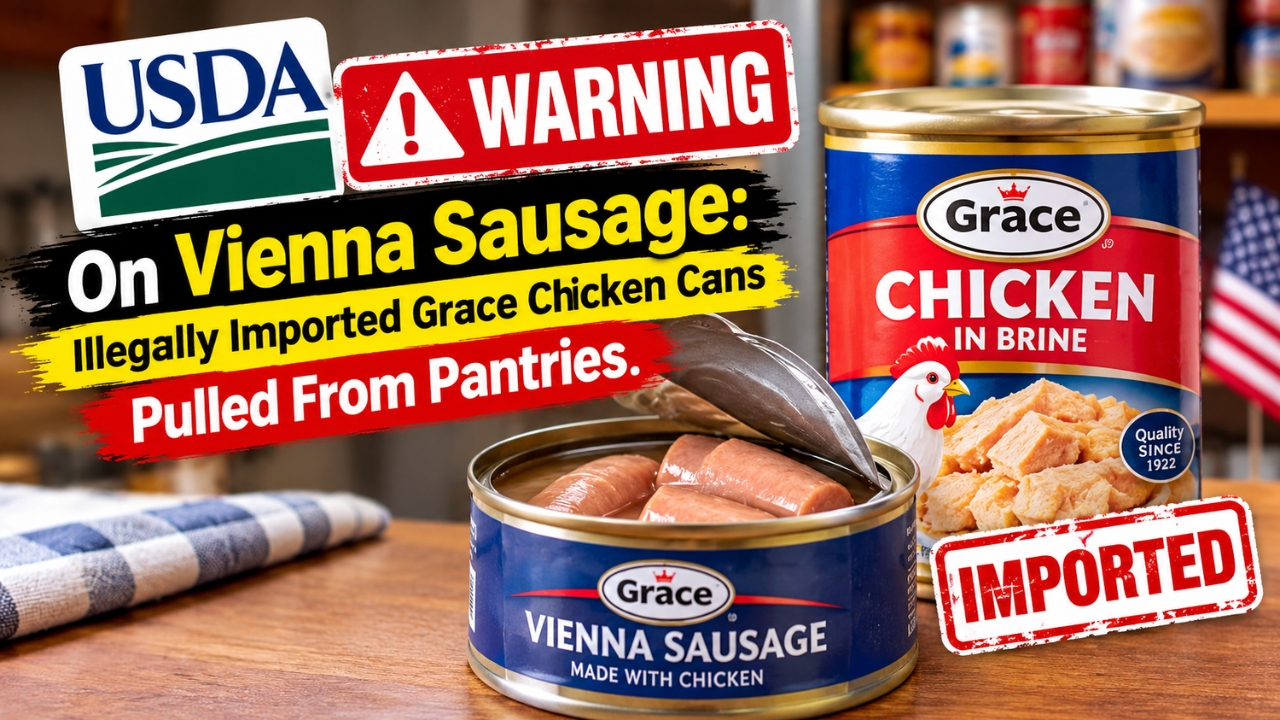
If you keep canned sausages for quick lunches, camping trips or emergency shelves, this alert is worth a minute of your time. The USDA’s Food Safety and Inspection Service (FSIS) has issued a USDA warning on Vienna sausage. It covers canned chicken Vienna-style sausages that were illegally brought into the United States from Jamaica. Jamaica is not an approved exporter of meat or poultry products to the U.S., so these cans never went through the checks American consumers rely on.
The alert is not a conventional recall tied to a bacteria finding, and no illness has been linked to the cans. That detail matters. The concern is that the products entered the country outside the approved system, so their safety cannot be verified. Below is what we know, which products are involved, and how to handle any cans you may already own.
Which Vienna Sausage Products Are Affected?
The alert covers two Grace Foods products, and it applies regardless of the date printed on the can. Check the label on any 140-gram can in your pantry against this list.
| Detail | Information |
|---|---|
| Product 1 | Grace Ready to Eat Chicken Vienna Sausages (140 g can) |
| Product 2 | Grace Ready to Eat Chicken Vienna Sausages Hot & Spicy (140 g can) |
| Country of origin | Jamaica |
| Inspection mark | Jamaica mark of inspection with “EST. NO G-01” |
| States where sold | Alabama, Florida, Georgia, Maryland, Texas |
| Date codes | All dates covered |
| Reported illnesses | None confirmed so far |
| Recommended action | Do not eat; discard or return to place of purchase |
Why Is This Vienna Sausage Warning Different From a Typical Recall?
Most food recalls start with a contamination finding such as Listeria or Salmonella, or an undeclared allergen. This one starts with a paperwork and oversight problem. Meat and poultry sold in the U.S. must come from countries whose inspection systems the USDA has reviewed and approved. Jamaica is not on that list, so canned chicken from Jamaica is not allowed to be sold here.
FSIS found the cans through routine surveillance of imported products already on store shelves, not because someone got sick. The agency is still investigating how the sausages entered the country. Because the cans are shelf-stable and long-lasting, officials are concerned that some may still be sitting in home pantries, which is why the alert applies to every date code.
What Should You Do If You Have These Cans at Home?
The guidance is simple. Check the label, then act on it.
- Look for “Grace Ready to Eat Chicken Vienna Sausages” in the 140-gram size, including the Hot & Spicy variety.
- Find the Jamaica inspection mark with “EST. NO G-01” on the label.
- Do not eat the product, even if the can looks normal and is well within its date.
- Throw it away, or return it to the store where you bought it.
- Wash your hands and any surface the can touched if you have opened it.
If you have eaten these sausages and feel unwell, contact a health care provider and mention the product. No illness has been confirmed, but anyone with a concern should get medical advice rather than wait.
Who Is Most Likely to Have Bought Them?
The importer distributed the cans to retail locations in five states: Alabama, Florida, Georgia, Maryland and Texas. Imported Caribbean groceries often show up in neighborhood markets and specialty shops, so it is worth checking food you bought there, or items a relative or friend brought back from a trip and gave you. Shoppers outside those five states are less likely to be affected. Even so, if you find these exact cans, treat them the same way.
How to Stay Safe With Imported Canned Foods
This alert is a good reminder to build a few habits when you buy imported canned goods:
- Check the label for a U.S. mark of inspection on meat and poultry products.
- Buy from stores that source through licensed U.S. importers and distributors.
- Be cautious with meat products brought in by travelers or sold by informal sellers.
- Keep your own record of products you buy in bulk, so you can check them against alerts.
- Follow FSIS and FDA alerts for new notices about products in your pantry.
Frequently Asked Questions
Is the Vienna sausage warning a recall?
It is a public health alert rather than a formal recall. The USDA issues one when a product is already in commerce and may still be in consumers’ homes, as it has done here for the illegally imported cans.
Has anyone gotten sick from these sausages?
No. There have been no confirmed reports of illness or injury linked to these products. The concern is that the cans were imported illegally and bypassed U.S. inspection.
Are all brands of Vienna sausage affected?
No. The alert covers only the Grace Ready to Eat Chicken Vienna Sausages and Grace Ready to Eat Chicken Vienna Sausages Hot & Spicy in 140-gram cans, carrying the Jamaica inspection mark “EST. NO G-01”.
What should I do with the cans I already bought?
Do not eat them. Throw them away or return them to the store where you bought them. If you feel unwell after eating them, contact a health care provider.
Sprouting Seeds Recall: What the Salmonella Outbreak Means for Your Kitchen and Garden
1 thought on “USDA Warning on Vienna Sausage: Illegally Imported Grace Chicken Cans Pulled From Pantries”