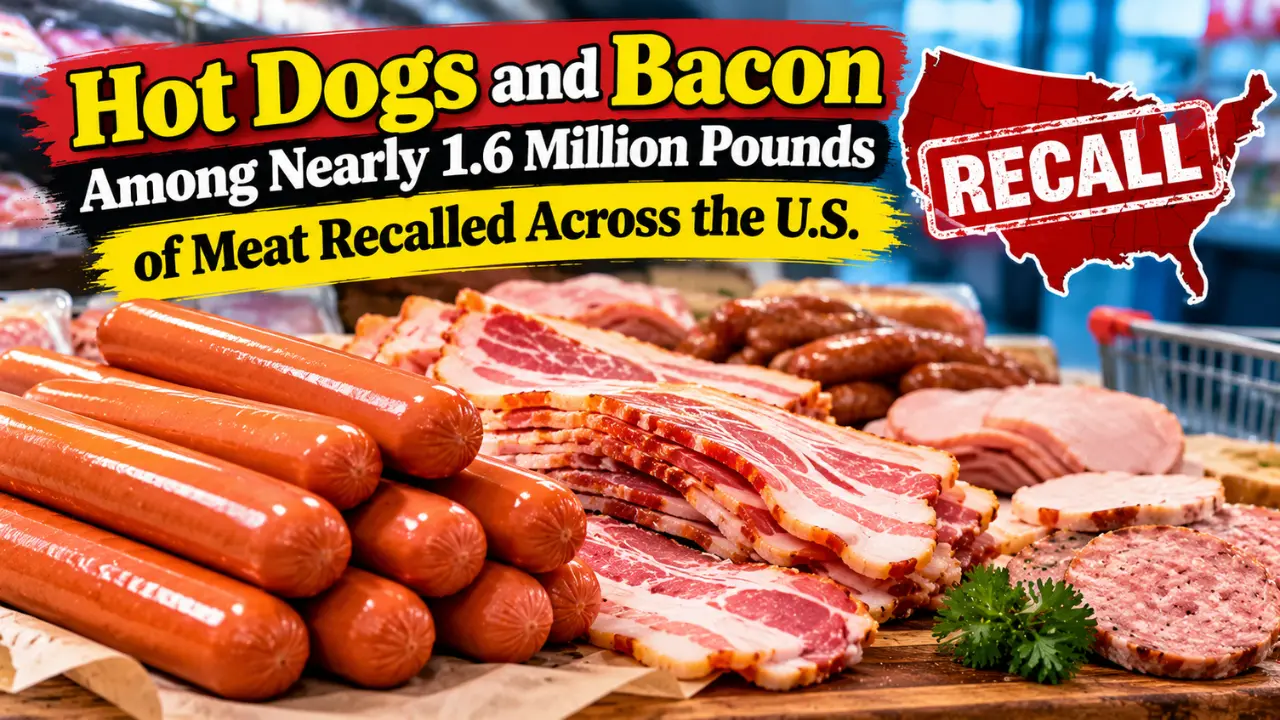
A Massachusetts company is recalling nearly 1.6 million pounds of ready-to-eat meat and poultry products because of a storage temperature problem. If you have hot dogs, bacon, or deli meats in your fridge or freezer, it is worth checking the label before your next meal.
This guide explains what was recalled, why it happened, and what to do if you have an affected product at home.
What Happened
Kayem Foods Inc., based in Chelsea, Massachusetts, issued a voluntary recall of about 1,584,361 pounds of ready-to-eat items. The recall began after a cooling system malfunction at one of the company’s warehouses caused storage temperatures to go outside safe limits.
The problem came to light when a retail customer complained on October 1 that a product was warm when it was delivered. Kayem says the malfunction has been fixed and that the recall is being carried out out of an abundance of caution.
Why You Should Take It Seriously
The USDA’s Food Safety and Inspection Service (FSIS) placed the recall in Class I, its highest-risk category. This means there is a reasonable chance that eating the products could cause serious health problems. The classification is a precaution for food that may have been kept at unsafe temperatures, and no illnesses have been reported so far.
Quick Facts
| Detail | Information |
|---|---|
| Company | Kayem Foods Inc., Chelsea, Massachusetts |
| Amount recalled | About 1,584,361 pounds |
| Reason | Possible temperature abuse during storage |
| Risk class | Class I (highest category) |
| Production dates | March 31 to October 7 |
| Shipping dates | June 7 to October 14 |
| Where sold | Retail and food service locations nationwide and in Hong Kong |
| Illnesses reported | None so far |
Which Products Are Included?
The recall covers a wide range of items, including bacon, bologna, bratwurst, brisket, chicken sausage, corned beef, frankfurters, hot dogs, and kielbasa. Examples include Kayem Beef & Pork Hot Dogs, Kayem Double Smoked Thick Cut Bacon, Kayem Slow Smoked Beef Brisket, Genoa Hot Ham, Al Fresco Roasted Pepper & Asiago Chicken Sausage, and Triple M Boneless Ham Steaks.
Brands named in the recall include Kayem, Al Fresco, Triple M, McKenzie, Deutschmacher, Jordan’s, Essem, and Winnisimmet St. Some reports list slightly different brand names, so use the official USDA list as your final check.
How to Check Your Products
- Look at the brand. Check whether the package carries one of the brands above.
- Find the USDA mark. Look for the establishment numbers “EST. M/P 7839,” “EST. P 20935A,” or “EST. M 9520” inside the USDA mark of inspection.
- Check the dates. Compare the package with the production and shipping dates above.
- Review the full list. Kayem has published a nine-page list of all affected items, available on the USDA FSIS website.
What to Do If You Have a Recalled Product
| Situation | What to Do |
|---|---|
| Product is unopened | Do not eat it. Throw it away or return it to the store |
| Product is already opened | Do not eat it. Throw it away |
| Product is in the freezer | Still discard it or return it. Freezing does not make it safe |
| You already ate some | Watch for symptoms such as stomach pain, vomiting, or diarrhea, and call a doctor if you feel unwell |
| You are unsure | When in doubt, throw it out |
Tips to Keep Your Kitchen Safe
- Keep your fridge at 40°F (4°C) or below. Use a thermometer to check.
- Do not leave ready-to-eat meats out for more than two hours. The limit is one hour in hot weather.
- Wrap and store opened packages properly. Use airtight containers or sealed bags.
- Sign up for recall alerts. The USDA and FDA both offer email notifications.
- Check recalls before big meals. Hot dogs and bacon are common at gatherings, so a quick check can save trouble.
Frequently Asked Questions
Is it safe to eat the products if they look and smell normal?
No. Bacteria that cause foodborne illness can grow without changing the look, smell, or taste of food. Do not eat recalled products.
Can I cook the meat to make it safe?
Not reliably. These are ready-to-eat products that may have been held at unsafe temperatures, and some bacteria produce toxins that cooking does not remove. Discard them.
Has anyone gotten sick?
No illnesses have been reported so far, according to the company and FSIS.
What does “Class I recall” mean?
It is the most serious recall category. It means the product could cause serious health problems if eaten. It does not mean anyone has been harmed.
Where can I see the full list of recalled items?
The complete list is on the USDA Food Safety and Inspection Service website, with exact product names, sizes, and codes.