
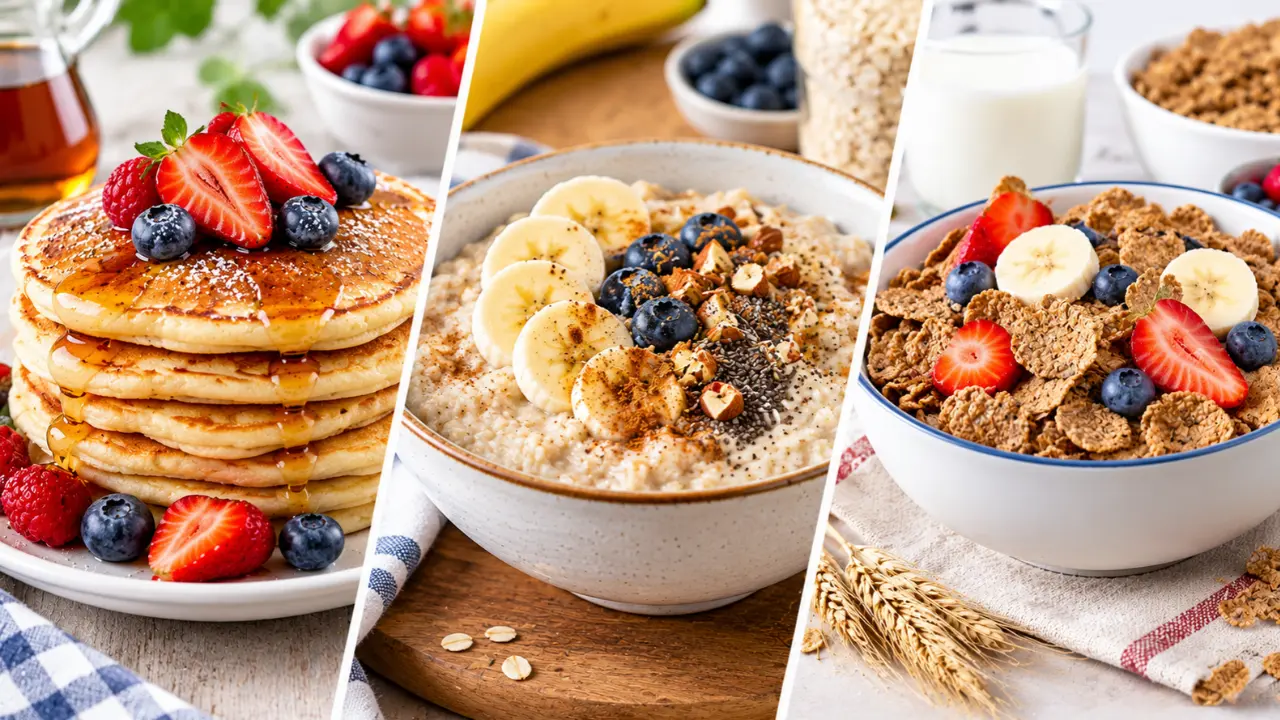
Pancakes, oatmeal, and whole-grain cereal all sit in the same “carb-based breakfast” category, but they can end up very different nutritionally. What actually separates a healthy bowl or stack from an unhealthy one comes down to three things: how much whole grain and fiber it has, how much added sugar it carries, and what you pair it with. Here’s how each one holds up.
Oatmeal is the strongest starting point
Oatmeal is naturally a 100% whole grain, and dietitians consistently rank it near the top of breakfast choices. Plain rolled oats contain no added sugar and provide around 4 grams or more of fiber per serving, which helps keep you full and supports steady blood sugar. Oats are also known for their cholesterol-lowering effects. The one trap is flavored instant packets, which often come loaded with sugar, so dietitians suggest starting with plain oats and adding your own fruit, nuts, or cinnamon.
Whole-grain cereal can be great or terrible depending on the box
Breakfast cereal is the most variable of the three. Dietitians advise looking for cereals that are 100% whole grain, with at least 3 grams of fiber per serving and about 6 grams of sugar or less. A quick label trick: if sugar appears in the first three ingredients, it’s likely too sweet. Cereals like plain Cheerios, which contain just 1 gram of sugar per serving, show that a cereal can be genuinely healthy, but many boxes labeled “healthy” still hide large amounts of added sugar.
| Breakfast | Whole Grain? | Fiber | Added Sugar | Healthiest Way to Eat It |
|---|---|---|---|---|
| Plain rolled oatmeal | Yes, 100% | ~4g+ per serving | None | Top with fruit, nuts, cinnamon |
| Whole-grain cereal | Depends on brand | 3g+ if labeled well | Aim for 6g or less | Pair with milk and berries |
| Traditional pancakes | Usually refined flour | Low | Often high with syrup | Make whole-grain, top with fruit |
| Whole-grain pancakes | Yes, if made with whole flour | Higher than regular | Low if lightly topped | Add banana, nut butter, or yogurt |
Pancakes are the least healthy by default, but easy to improve
Standard pancakes and frozen versions are usually made from refined flour, which has had much of its fiber and nutrients stripped away, and they’re often eaten with plenty of syrup. That makes them the weakest of the three on a typical morning. The good news is they’re easy to upgrade: swapping in whole-wheat flour boosts fiber, and topping with fresh fruit, mashed banana, or a spoonful of nut butter instead of syrup makes a real difference. Dietitians note that whole-grain pancakes can absolutely be part of a high-fiber breakfast.
What you add matters as much as what you start with
Any of these breakfasts becomes more balanced with the right pairings, because carbs on their own can lead to a mid-morning crash. A few easy upgrades:
- Add protein with milk, yogurt, eggs, or a spoonful of peanut butter
- Use cow’s milk or soy milk rather than almond or coconut milk for more protein
- Top with berries or sliced fruit for fiber, vitamins, and natural sweetness
- Sprinkle on chia seeds, flaxseed, or nuts for fiber and healthy fats
- Skip the extra sweeteners, and let fruit or cinnamon do the work
The verdict: which breakfast is healthiest?
Plain oatmeal wins on nutrition, with the most reliable fiber and no added sugar. A well-chosen whole-grain cereal is a close second and the most convenient for busy mornings. Pancakes come last in their standard form, but a whole-grain version topped with fruit can be a perfectly reasonable weekend breakfast. The best choice is whichever one you’ll eat consistently, built with whole grains, protein, and as little added sugar as possible.
FAQs
Q: Is oatmeal healthier than cereal?
Usually, yes. Plain oatmeal is naturally whole grain with no added sugar, while cereal varies widely. A cereal that’s 100% whole grain, high in fiber, and low in sugar can be nearly as good.
Q: Are pancakes ever a healthy breakfast?
They can be if you use whole-grain flour, keep the sugar low, and top them with fruit and protein instead of syrup.
Q: How much sugar should healthy cereal have?
Dietitians generally recommend choosing cereals with about 6 grams of sugar or less per serving and at least 3 grams of fiber.
Q: Is instant oatmeal as healthy as rolled oats?
Plain instant oats are similar, but flavored packets often contain added sugar. Choosing unflavored versions and adding your own toppings is healthier.
This article is for general information and isn’t a substitute for medical advice. If you have diabetes or another health condition, check with your doctor or dietitian about what’s best for you.