
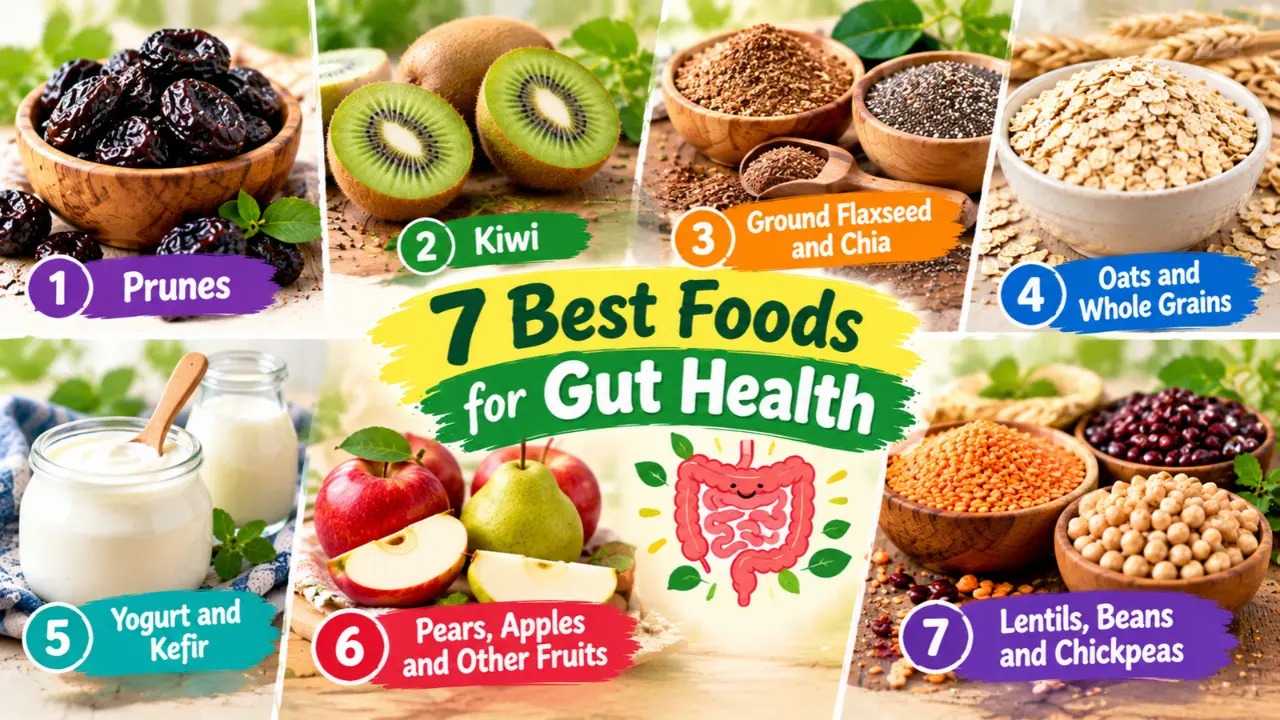
Few health topics get talked about as quietly as constipation, and few are as common. The good news is that food can make a real difference for many people. The not-so-glamorous news is that the evidence is stronger for a short list of foods than for the long lists you’ll see online. Here are seven that earn their place, with what’s known about each and how to use them without upsetting your stomach.
1. Prunes
Prunes are the best-known constipation food, and they live up to it. They contain fibre plus sorbitol, a sugar alcohol that isn’t broken down in digestion, so when it reaches the colon the body responds by moving things along, according to Johns Hopkins Medicine. Studies have compared prunes with psyllium and found them similarly effective or better. Doses quoted range from a few prunes a day to about 50 to 100 g (roughly 6 to 12), so start small and build up. One caution is that sorbitol is a FODMAP, so prunes may not suit people with IBS who are sensitive to these.
2. Kiwi
Kiwi is a gentle everyday option. Each fruit provides roughly 2.3 g of fibre, and the fibre holds water, which helps soften stools. A study across Italy, Japan and New Zealand reportedly found that eating two kiwis a day increased complete bowel movements by more than 1.5 per week, with less bloating than some other fibre sources. Both green and gold varieties seem to work, and kiwi is low FODMAP, which makes it a good option for constipation-predominant IBS. You can eat the skin after washing it for extra fibre.
3. Ground Flaxseed and Chia
Seeds are a simple way to add fibre. Milled flaxseed is easier to digest than whole seeds, and a typical amount is 1 to 2 tablespoons (10 to 20 g) stirred into porridge, smoothies or yoghurt. Chia is another dense source: a 25 g serving provides around 9 g of fibre, nearly a third of the 30 g daily target. Both soak up water, so drink plenty of fluid alongside them, or they can make things worse.
4. Oats and Whole Grains
Oats give you soluble fibre, the kind that forms a soft gel in the gut, and they pair well with kiwi, prunes or seeds in a single bowl. Other whole grains such as brown rice, millet and whole-wheat bread add insoluble fibre, which bulks up stool. Swapping refined grains for whole ones is one of the easiest long-term changes you can make. Refined foods like white bread, pastries and chips tend to do the opposite.
5. Yoghurt and Kefir
Fermented dairy contains live bacteria that may support your gut. Most dairy won’t relieve constipation on its own, but fermented types like kefir can help because they contain beneficial bacteria and yeasts. Choose plain yoghurt with live cultures and pair it with fibre-rich toppings like fruit, oats, chia or flax. Probiotic effects depend on the strain, and the evidence for constipation is mixed, so think of these as supporting players.
6. Pears, Apples and Other Fruit With Edible Skins
Fruit gives you fibre and water, and the skins add extra fibre, so wash and eat them whole. Pears and apples both contain sorbitol, which can help, and Johns Hopkins notes apple juice has some too, though less than prunes. Whole fruit is the better choice, since juice offers less fibre and more sugar.
7. Lentils, Beans and Chickpeas
Pulses are one of the cheapest sources of fibre, plus protein and minerals. They feed the bacteria in your gut and add bulk, though they can cause wind if you jump from none to a lot. Add them gradually, starting with a few spoonfuls in soups, dal or salads, and rinse tinned ones well.
Quick Reference
| Food | Why it helps | How to use it |
|---|---|---|
| Prunes | Fibre plus sorbitol | A few a day, or stirred into oats |
| Kiwi | Water-holding fibre | One or two a day, skin on if you like |
| Ground flaxseed, chia | Soluble and insoluble fibre | 1 to 2 tablespoons in porridge or yoghurt |
| Oats, whole grains | Soluble and insoluble fibre | Porridge, brown rice, whole-wheat bread |
| Yoghurt, kefir | Live bacteria | Plain, with fruit and seeds |
| Pears, apples | Fibre and some sorbitol | Whole, with skin |
| Lentils, beans, chickpeas | Fibre and plant protein | Dal, soups, salads |
Habits That Make It Work
Food does its best work with a few supporting habits:
- Add fibre gradually, and drink more water as you do. Fibre needs fluid to work, and increasing it quickly can cause wind and bloating.
- Move your body. Even a short walk helps stimulate the gut.
- Try a hot drink. Johns Hopkins notes that hot beverages, particularly caffeinated ones, can speed digestive motility.
- Don’t ignore the urge to go. Holding it in can make constipation worse.
- Go easy on foods that can slow things down, such as fried foods, processed meats and low-fibre packaged snacks.
- Change one thing at a time, so you can tell what’s helping.
What the Evidence Really Says
It’s worth being honest about the research. A 2023 systematic review of foods, drinks and diets in chronic constipation found the overall quality of evidence was low and wasn’t strong enough to recommend simply “eating more fibre” as a blanket rule. That doesn’t mean fibre doesn’t help. The foods that did show benefit, like prunes and kiwi, are all rich in it, and fibre supports gut health in general. It just means the best approach is to choose one or two evidence-backed foods, add them gradually and see how your body responds over a week or two.
When to See a Doctor
Constipation is usually harmless, but don’t ignore warning signs. See a doctor if you notice blood in your stool, severe or ongoing abdominal pain, unexplained weight loss, a sudden change in bowel habits that lasts, or constipation that doesn’t improve with diet and fluids. People with IBS, diabetes or other conditions, and those taking regular medication, should also check before making big changes. This article is general information, not medical advice.
Frequently Asked Questions
How quickly do these foods work?
It varies. Some people notice a difference within a few days, and one study found prunes improved stool consistency within a week. Fibre-based changes tend to build over one to two weeks, so give them time and keep fluids up.
How much fibre do I need each day?
A common recommendation is around 30 g a day for adults, though many people eat far less. Build up gradually, since adding a lot at once can cause bloating and wind.
Are prunes safe if I have IBS?
Not always. Prunes contain sorbitol, which is a FODMAP and can trigger symptoms in some people with IBS. Kiwi is low FODMAP and is often better tolerated. If you have IBS, ask your doctor or a dietitian which foods suit you.
Do probiotics help constipation?
Some strains have shown benefit, but results vary by strain and by person. Fermented foods like plain yoghurt and kefir are a reasonable addition, but they work best alongside fibre and fluids, not instead of them.
1 thought on “7 Best Foods for Gut Health: Improve Digestion and Relieve Constipation Naturally”