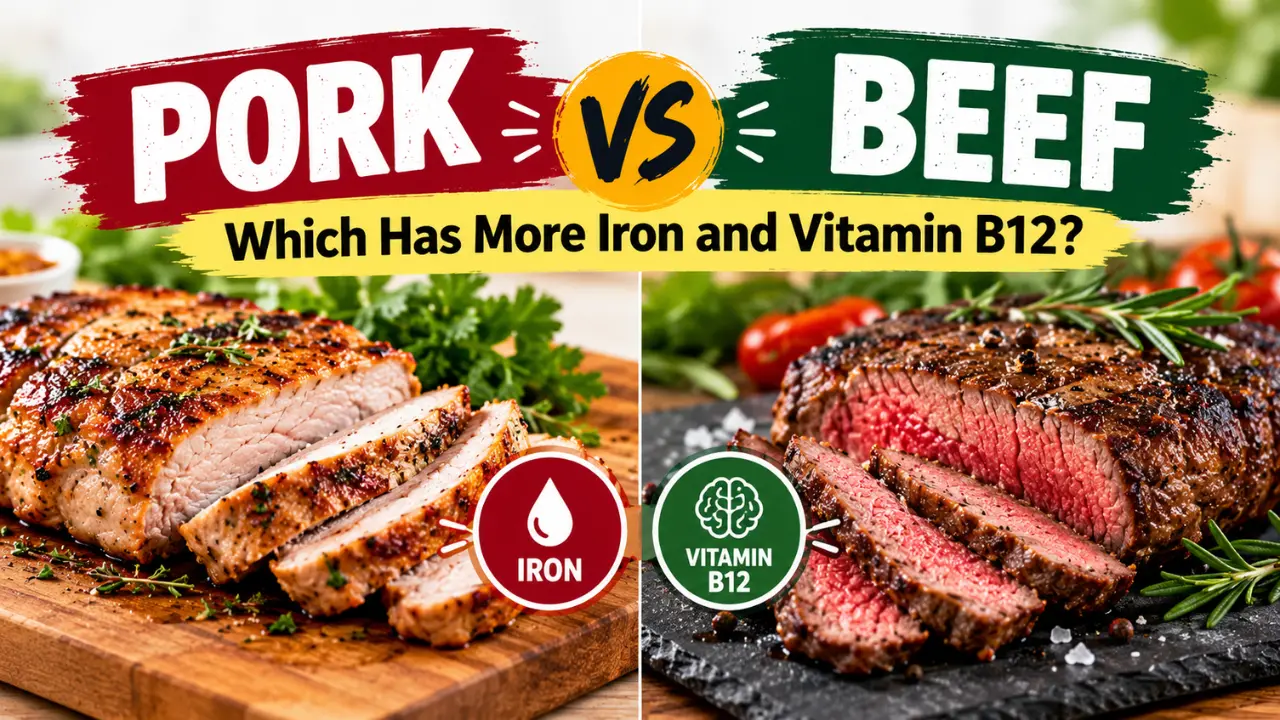
If you’ve ever been told to “eat more red meat” after a low iron result, you may have wondered whether pork counts. It’s red-ish, it’s meat, and it’s often cheaper. So is it a fair swap for beef?
The short answer is that beef is clearly ahead on both iron and vitamin B12. But pork has its own strengths, and the full picture is a bit more interesting than a simple scoreboard. Let’s go through the numbers, then the practical stuff.
The Short Answer: Beef Wins on Iron and B12
Using USDA-based data for cooked ground meat, the gap is easy to see. Beef has around 2.3 mg of iron per 100 grams, compared with 1.3 mg in pork. The vitamin B12 difference is bigger: about 2.9 micrograms per 100 grams in beef versus 0.54 micrograms in pork. soupersagesoupersage
Another source comparing nutrient profiles puts it in everyday terms. Ground beef supplies roughly 36% of the daily value for vitamin B12 and 11% for iron per 100 grams, while ground pork supplies around 12% and 5%. nutritionadvance
In plain English, beef gives you roughly double the iron and several times the B12 of pork, portion for portion. If either nutrient is your main goal, beef is the stronger choice.
Side-by-Side Comparison
Here’s how the two stack up, using the cooked ground-meat figures above as a rough guide.
| Nutrient (per 100 g, cooked) | Beef | Pork |
|---|---|---|
| Iron | About 2.3 mg | About 1.3 mg |
| Vitamin B12 | About 2.9 µg | About 0.54 µg |
| Thiamin (vitamin B1) | Lower | Higher |
| Calories | About 277 | About 297 |
Pork comes out higher in thiamin, while beef is higher in B12. The calorie figures here may surprise you: they come from specific ground products, and pork was slightly higher in this comparison. Calories and fat swing a lot depending on the cut and how lean the meat is, so treat these numbers as examples, not universal truths. soupersage
Why the Cut and Cooking Method Matter
Averages hide a lot. A lean pork tenderloin and a fatty pork belly are very different foods. In one comparison, raw pork belly had only about 0.52 mg of iron per 100 grams, compared with 2.3 mg in cooked beef. But that comparison also mixes raw and cooked meat, which isn’t a fair test, because cooking removes water and concentrates nutrients by weight. soupersage
A few things to keep in mind:
- Fat content changes the picture. Fattier cuts have more calories and, per gram, a smaller share of protein, iron and B12.
- Cooked vs. raw numbers aren’t interchangeable. Always compare like with like.
- Product labels vary. Ground beef with 30% fat will look different from lean mince or a steak.
- Organ meats are in a different league. Liver, from either animal, is far richer in iron and B12 than muscle meat, though it’s not for everyone and should be eaten in moderation.
What About Absorption?
Meat contains heme iron, which your body absorbs more easily than the non-heme iron found in plants like spinach, lentils and fortified cereals. That’s one reason meat is such a reliable iron source. Both pork and beef provide heme iron, so even though pork has less, it still counts.
Vitamin B12 is found naturally almost only in animal foods, which makes it an important nutrient to watch for vegetarians and vegans, who often need fortified foods or supplements. Adults generally need about 2.4 micrograms a day, so a single serving of beef can cover a large share of that, while pork contributes a smaller but still useful amount.
Your own needs depend on age, sex, pregnancy and health. Women of reproductive age often need more iron than men, for instance, so don’t treat any figure here as personal advice.
What Pork Does Better
It would be unfair to call this a total knockout. Pork has real advantages:
- It’s one of the best everyday sources of thiamin (vitamin B1), which helps your body turn food into energy.
- Lean cuts like tenderloin are quite low in fat, and some sources note that pork tenderloin is remarkably lean, often rivalling chicken breast, whereas some beef cuts are noticeably higher in total and saturated fat. harvard
- It’s often more affordable, depending on where you live.
So the better choice isn’t always the one with the most iron. If your iron and B12 are fine, a lean pork dish is a perfectly good meal.
How to Choose (And How Much to Eat)
If you’re trying to raise iron or B12, beef, lean cuts especially, is the more efficient option. If your levels are normal and you just want variety, rotate pork, beef, chicken, fish, eggs, dairy and legumes.
Two sensible cautions:
- Moderation matters. Health organisations generally advise limiting red meat and keeping processed meats like bacon, ham and sausages low, since the World Health Organization classes processed meat as carcinogenic and red meat as probably carcinogenic to humans.
- More iron isn’t always better. Some people, such as those with hemochromatosis, can build up too much iron. Excessive beef consumption can raise circulating iron to unhealthy levels in some individuals. nutritionadvance
If you suspect low iron or B12, get a blood test before changing your diet or buying supplements. Symptoms like fatigue, pale skin, tingling or breathlessness have many possible causes.
Final Thoughts
Beef is the winner for iron and vitamin B12, by a clear margin. Pork isn’t a poor relation, though. It brings thiamin, can be wonderfully lean, and fits easily into a balanced diet.
If you need more iron or B12, lean beef is the better pick, alongside other sources like fish, eggs, dairy, legumes and fortified foods. Otherwise, choose based on taste, budget and how you plan to cook it, and keep portions reasonable. The best diet is the varied one you can actually enjoy.
Frequently Asked Questions
Is pork a good source of iron?
It’s a modest source. Pork contains heme iron, which is well absorbed, but the amount is lower than in beef. It can contribute to your daily intake, though it’s not the best choice if you’re trying to correct low iron.
Which meat is higher in vitamin B12?
Beef. Cooked ground beef provides several times more B12 per 100 grams than cooked ground pork, based on USDA-derived data.
Is lean pork healthier than beef?
It depends on the cut. Lean pork like tenderloin can be lower in fat than many beef cuts, but beef offers more iron, B12 and zinc. “Healthier” depends on what you need most.
Can I get enough iron and B12 without red meat?
Yes, with planning. Poultry, fish, eggs, dairy, legumes, leafy greens and fortified foods all help. B12 is harder to get without animal products, so vegetarians and vegans may need fortified foods or supplements. Check with your doctor or a dietitian about your own needs.