
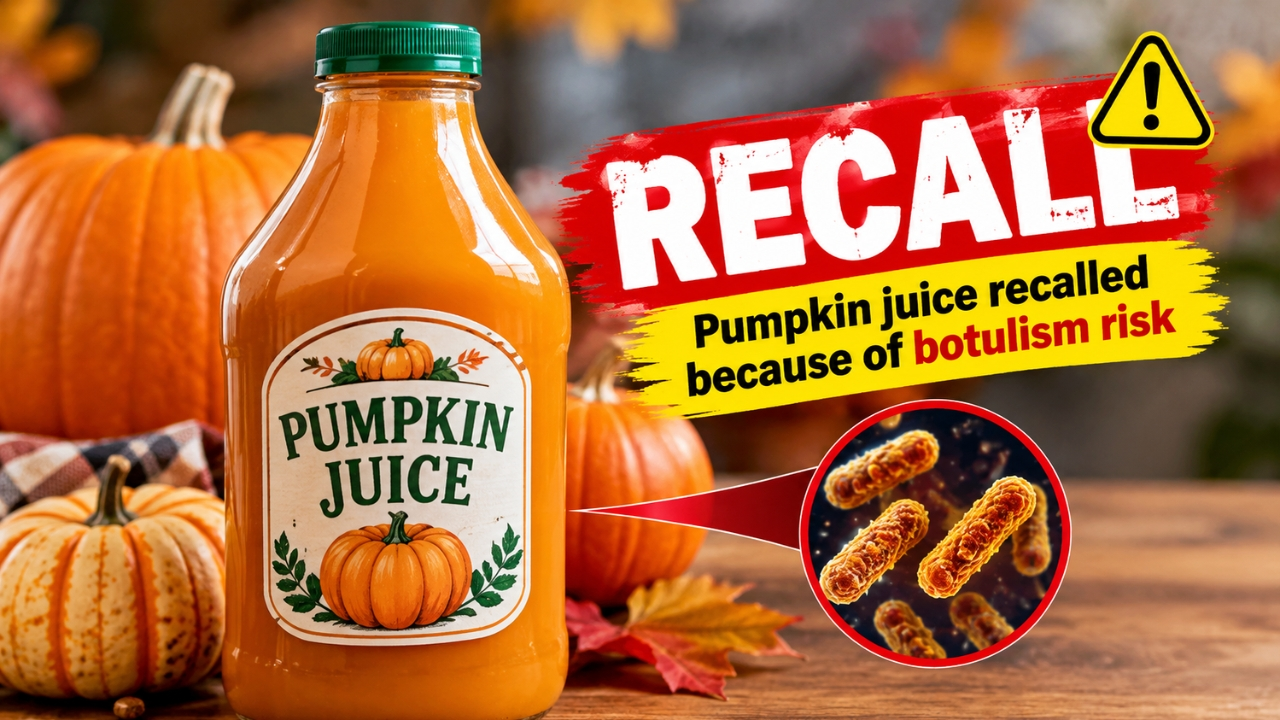
Pumpkin season usually brings cozy drinks and fall recipes, which makes news of pumpkin juice recalled because of botulism risk especially unwelcome. Walker’s Wine Juice LLC of Forestville, New York, has recalled its pumpkin juice after the product may have been contaminated with the bacteria that cause botulism, a rare but potentially fatal form of food poisoning. No illnesses have been reported so far, and the recall is a precaution. If you buy, make or sell juice for fall menus, home brewing or winemaking, though, it is worth understanding what went wrong.
Why Was the Pumpkin Juice Recalled?
The problem came to light during an inspection by food inspectors from the New York State Department of Agriculture and Markets. They found that the pH of the pumpkin juice was too high for it to be safely processed under the company’s “hot fill” method. Because of that, the product did not receive an adequate kill step, which is the heat treatment meant to destroy harmful microorganisms.
In plain terms, the juice was not acidic enough for the process used on it. That left open the possibility that botulism-causing bacteria could survive and grow. The company has not reported any confirmed contamination or illness, but a missing safety step is serious enough on its own to trigger a full recall of all lots.
Which Products and States Are Affected?
The recall covers every lot of Walker’s pumpkin juice in the formats below. The juice was sold through the company’s own retail store in New York and shipped directly to a limited number of commercial wineries in several states.
| Product format | How it is identified | Lots affected |
|---|---|---|
| Bag-in-box | 2.5-gallon, labeled “pumpkin” | All lots |
| Hot pack | 5-gallon, labeled “pumpkin” | All lots |
| Bulk containers | 30-, 60- and 275-gallon, tagged “pumpkin” | All lots |
| Distribution states (to wineries) | IL, IN, KS, KY, ME, MI, MN, NJ, NY, OH, PA, WI | Limited number of commercial wineries |
Since these are mostly large-volume containers, the people most likely to be affected are winemakers, cideries and similar producers rather than everyday grocery shoppers. If you bought pumpkin juice from Walker’s, or from a winery that may have used it, check the container and contact the seller.
Why Botulism Is Such a Serious Concern
Botulism is caused by toxins made by Clostridium botulinum, a bacterium whose spores are common in the environment. The danger shows up when low-acid foods are processed or stored improperly. Without enough acidity or heat, spores can germinate in a sealed, oxygen-poor container and produce toxin. This is why pH control matters so much for juices, canned vegetables and home preserves.
Pumpkin is naturally a low-acid food, so pumpkin-based products need careful handling. Some practical points:
- You cannot reliably see, smell or taste botulism toxin, so a normal-looking product is not proof of safety.
- Commercial processors depend on tested pH levels and validated heat schedules, not guesswork.
- Home canners should follow tested, up-to-date canning guidance for low-acid foods like pumpkin and never improvise.
Botulism Symptoms You Should Never Ignore
Botulism affects the nervous system. According to the recall notice, symptoms can include general weakness, dizziness, double vision, and trouble speaking or swallowing. Difficulty breathing, weakness in other muscles, abdominal distension and constipation may also occur.
Anyone with these symptoms should seek immediate medical attention. Botulism is treatable, but early care makes a significant difference, so do not wait to see whether symptoms pass. Tell the medical team which product you consumed and when.
What to Do If You Have Recalled Pumpkin Juice
If you have any of the products listed above, take these steps:
- Do not drink, use or sell it. This includes using it in wine, cider or other drinks.
- Do not taste it to check. Botulism toxin can be dangerous in very small amounts.
- Keep the container out of reach of children and pets until you know how to dispose of it.
- Contact Walker’s Wine Juice or the place you bought it for instructions on returns, refunds or disposal.
- Clean surfaces and equipment that touched the juice, and wash your hands thoroughly afterward.
- Seek medical help right away if anyone who consumed it develops symptoms.
Frequently Asked Questions
Has anyone gotten sick from the recalled pumpkin juice?
No illnesses have been reported to date. The recall is a precaution after inspectors found a process failure.
Does the recall cover all lots?
Yes. Every lot of the 2.5-gallon bag-in-box, the 5-gallon hot pack, and the 30-, 60- and 275-gallon bulk pumpkin juice containers is subject to the recall.
Can I make the juice safe by boiling or reheating it?
Do not try. The right step is to stop using the product and follow the seller’s disposal or return instructions. Home treatment is not a reliable fix when the original process was inadequate.
What are the first signs of botulism?
Early signs can include weakness, dizziness, double vision, and trouble speaking or swallowing. Get medical attention immediately if you notice any of these after consuming a recalled product.
Cold Smoked Fish Recall: Is the Starfish Seafood Trio in Your Fridge?
1 thought on “Pumpkin Juice Recalled Over Botulism Risk: Affected Products, Symptoms and What to Do Next”