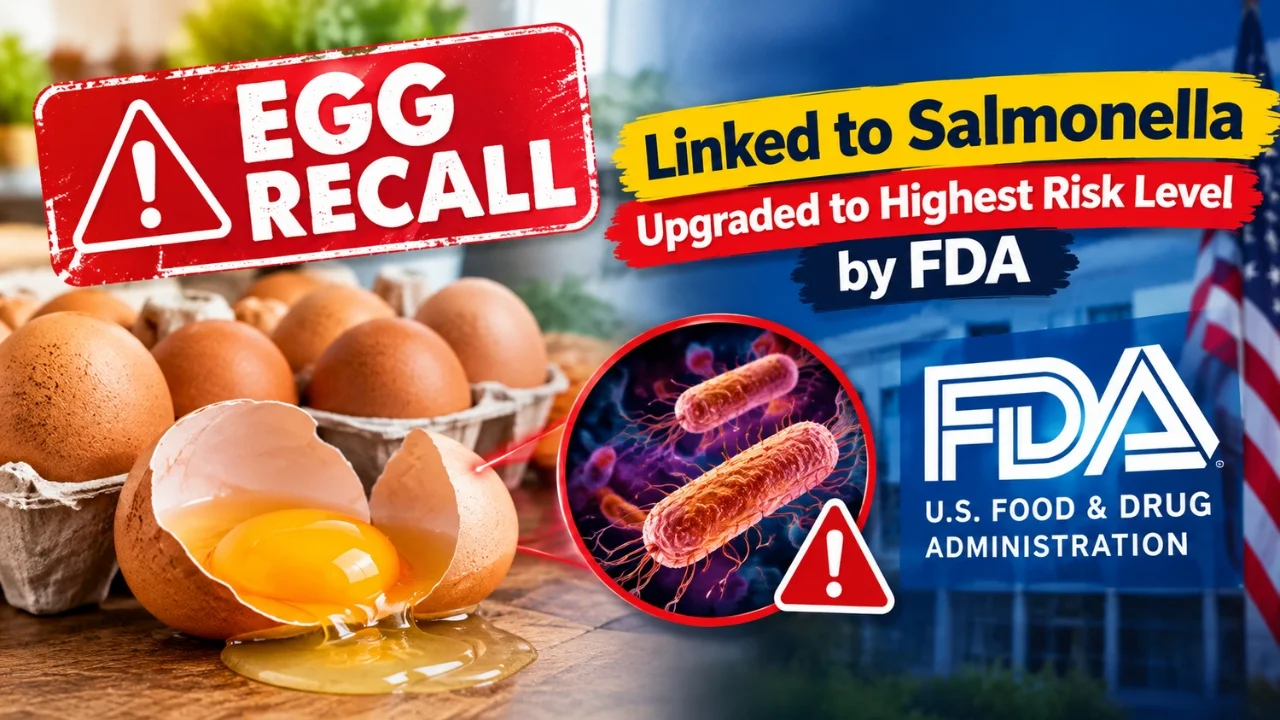
When a food recall moves to the FDA’s top risk tier, it deserves a closer look. The egg recall linked to salmonella involving Midwest Poultry Services began as a voluntary action in July 2026 and was later classified as Class I. That is the agency’s most serious category. If you shop for eggs in the southern United States, or you simply want to know how to handle a recall like this, here is a clear breakdown.
What Happened in This Egg Recall Salmonella Case?
Midwest Poultry Services announced on July 22 that it was recalling nearly 1.6 million dozen eggs, roughly 19 million individual eggs, over possible Salmonella Enteritidis contamination. The company said it acted as a precaution and was not aware of linked illnesses at the time. Health officials later reported that 98 people across 17 states had become ill, and 26 of them were hospitalized. No deaths have been reported.
The FDA’s Class I label came weeks after the original announcement. That timing is normal. The agency often classifies a recall days or weeks after a company starts it, so the upgrade does not necessarily mean the recall itself grew.
Recall Details at a Glance
| Detail | Information |
|---|---|
| Company | Midwest Poultry Services, L.P. |
| Product | White shell eggs and brown cage-free shell eggs |
| Where produced | Texas |
| Volume | About 1.6 million dozen (around 19 million eggs) |
| Sell-by / best-by dates | July 20, 2026 to August 17, 2026 |
| Carton code | P-1950 or 0840962, with a Julian date between 157 and 184 |
| FDA classification | Class I (highest risk level) |
| Reported illnesses | 98 people in 17 states, 26 hospitalized |
Where Were the Recalled Eggs Sold?
The eggs reached shoppers through several channels:
- Kroger stores in Texas and Louisiana
- Brookshire Grocery stores in Texas, Oklahoma, Arkansas, Louisiana, New Mexico and Mississippi
- Other smaller retail outlets
- Foodservice customers in Texas, Oklahoma and Louisiana
The company says no other Midwest Poultry Services products are part of the recall.
How to Check Your Eggs and What to Do
The code is printed in date-coding ink on the left or right side of the carton. Check it against the numbers in the table above. Even though the listed dates have passed, eggs bought during that window can still be sitting in a refrigerator or freezer, so it is worth checking now.
If your carton matches:
- Do not eat the eggs, and do not serve them to anyone else.
- Return them to the store where you bought them for a full refund.
- Wash your hands, along with any counters, containers or utensils that touched the eggs, with hot soapy water.
- If the eggs were cracked into a recipe you stored, such as a casserole or batter, treat that food with caution and discard it if you are unsure.
Salmonella Symptoms and Who Is Most at Risk
Salmonella infection often brings abdominal pain, fever, headache, nausea, vomiting, loss of appetite and watery diarrhea that may contain blood or mucus. Symptoms usually start between six hours and six days after exposure, and most healthy people recover within four to seven days without treatment.
Some groups face a higher chance of severe illness: children under 5, adults 65 and older, and people with weakened immune systems. If you or someone in these groups develops symptoms after eating eggs that may be part of the recall, contact a doctor rather than waiting it out. In general, salmonella causes about 1.35 million infections in the U.S. every year, and contaminated food is behind most of them.
Everyday Egg Safety Habits Worth Keeping
A recall is a good reminder of simple kitchen routines that lower risk at any time:
- Keep eggs refrigerated at 40°F (4°C) or below.
- Cook eggs until the whites and yolks are firm, and cook egg dishes to an internal temperature of 160°F.
- Be cautious with raw or undercooked eggs, especially when serving young children, older adults or anyone with a weakened immune system.
- Store eggs in their original carton so the code and dates stay readable.
- Sign up for retailer or FDA recall alerts so you hear about issues early.
Frequently Asked Questions
What does a Class I recall mean?
It is the FDA’s highest risk category. It describes a situation where using or being exposed to the product has a reasonable probability of causing serious health problems or death.
Does the upgrade mean more eggs were recalled?
Not necessarily. The FDA often assigns a classification after a company announces a recall, so the upgrade does not automatically signal an expansion.
How can I tell if my eggs are part of the egg recall salmonella case?
Look for the code P-1950 or 0840962 with a Julian date between 157 and 184 on the carton, and check that the sell-by date falls between July 20 and August 17, 2026.
Can I just cook the eggs thoroughly instead of returning them?
The company’s advice is not to consume the recalled eggs and to return them for a refund. Follow that guidance instead of trying to cook them.
Global Cookie Chain Closes 57 Locations in 2026: What Went Wrong at Crumbl
2 thoughts on “Egg Recall Salmonella Alert: 19 Million Eggs Now Carry the FDA’s Highest Risk Rating”