
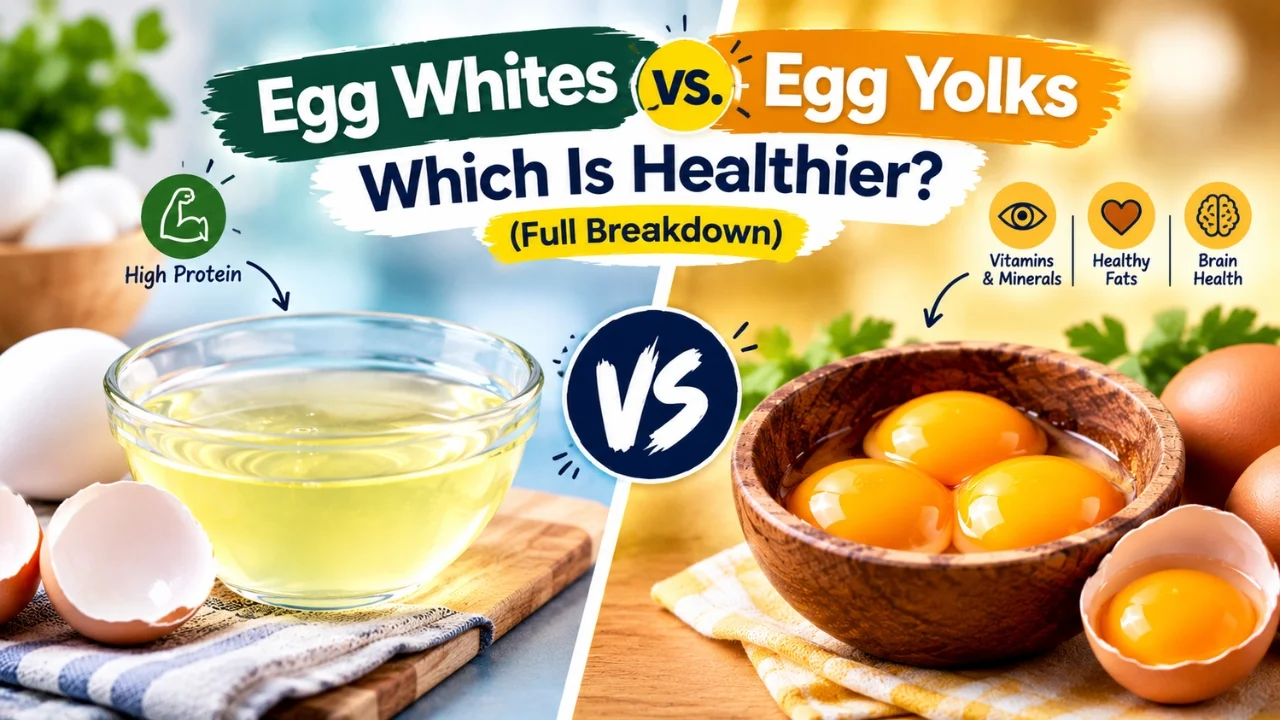
Egg whites and egg yolks are both nutritious, but they serve different purposes. Egg whites are low in calories and rich in protein, while yolks contain most of an egg’s vitamins, minerals, and healthy fats—so the “healthier” choice depends on your goals.
What’s Inside Each Part?
An egg is not simply one uniform food. The white is mostly water and protein, while the yolk is the nutrient-dense center that supplies fat-soluble vitamins and essential minerals.
-
Egg whites: High in protein, virtually fat-free, and very low in calories.
-
Egg yolks: Contain all the egg’s fat, plus vitamins A, D, E, K, B12, folate, selenium, phosphorus, and iodine.
-
Whole eggs: Provide the most complete nutritional package because the white and yolk complement each other.
A typical medium egg contains fewer than 70 calories overall, with the white contributing about 15 calories and the yolk about 52.
Egg Whites vs. Egg Yolks: Nutrition at a Glance
Egg yolk actually contains more protein gram for gram than egg white, but each egg contains more white by volume, which is why whites are often associated with high-protein eating.
Which Is Better for Weight Loss?
For someone prioritizing calorie control, egg whites are often the easier choice. They provide satisfying protein without adding fat, making them useful in an egg-white omelette, scrambled egg whites, or a high-protein breakfast.
However, cutting out yolks entirely is not necessary for most people. The yolk adds nutrients that support normal body functions, and its fats can make a meal more satisfying—potentially helping you avoid grazing later in the day.
A practical approach is to use one whole egg plus extra whites if you want volume and protein without too many calories.
Are Egg Yolks Bad for Cholesterol?
Egg yolks contain dietary cholesterol, which is why they have been debated for years. But cholesterol from food does not affect everyone’s blood cholesterol in the same way, and eggs also provide unsaturated fats, including omega-3 fatty acids.
For most healthy people, moderate egg intake can fit into a balanced diet. If you have been advised to limit dietary cholesterol, have familial high cholesterol, or have been advised to follow a heart-health plan, discuss your personal egg intake with a qualified healthcare professional or dietitian.
Which Is Best for Muscle Building?
For muscle support, whole eggs are difficult to beat. They provide high-quality protein along with nutrients that support energy metabolism, recovery, and overall health.
-
Use whole eggs when overall nutrition matters most.
-
Add extra whites when you need more protein without substantially increasing calories.
-
Pair eggs with carbohydrate-rich foods such as whole-grain toast, oats, or fruit to support training and recovery.
-
Avoid relying on egg whites alone if your overall diet is too low in healthy fats and micronutrients.
Egg whites are convenient, but the yolk is where much of the egg’s vitamin and mineral content is concentrated.
The Best Choice Depends on Your Goal
There is no single “best” egg part for everyone. The smartest choice is the one that fits your calorie needs, health conditions, training routine, and overall diet quality.
FAQs
Are egg whites healthier than egg yolks?
Egg whites are healthier if your priority is low calories and fat-free protein. Egg yolks are healthier if you want more vitamins, minerals, and healthy fats.
Can I eat egg yolks every day?
Many healthy people can include eggs regularly, but the right amount depends on your overall diet and cholesterol health. If you have a heart condition or high cholesterol, seek personalized advice.
Are egg whites good for weight loss?
Yes. They are low in calories, contain no fat, and provide protein that can help you feel full.
Is it better to eat whole eggs or egg whites?
For most people, whole eggs offer the best overall nutrition. Egg whites are useful when you specifically need extra protein with minimal calories.
Should I avoid egg yolks completely?
Not necessarily. Unless a healthcare professional has advised you otherwise, removing yolks entirely may mean missing valuable nutrients found naturally in whole eggs.
Egg Recall Salmonella Alert: 19 Million Eggs Now Carry the FDA’s Highest Risk Rating