
Berries are one of the easiest ways to add fibre to your day without any cooking. They’re sweet, they come in a punnet and they go on everything from porridge to ice cream. But if fibre is your goal, the three most popular berries are not equal, and the gap is bigger than most people expect. Here’s how they compare.
The Short Answer
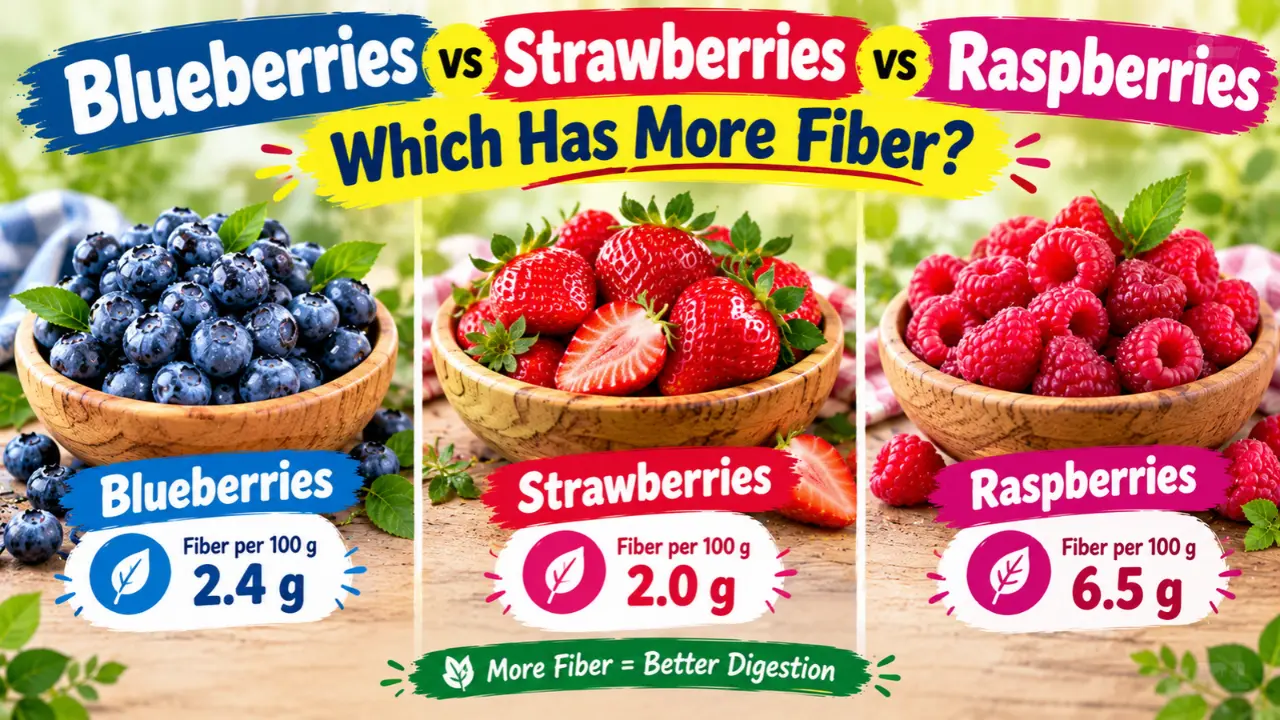
Raspberries win by a wide margin. Per 100 g, raspberries deliver about 6.5 g of fibre, compared with roughly 2 g for strawberries. Blueberries sit in between but much closer to strawberries, at around 2.4 g by my reading of USDA-style figures. In practical terms, you’d need to eat more than two cups of strawberries to match the fibre in a single cup of raspberries.
Raspberries: The Fibre Champion
A typical cup of raspberries is about 123 g, which contains roughly 64 calories and 8 g of fibre. That’s close to a third of the 28 g daily value in a single small bowl. The reason comes down to structure. Raspberries are made of lots of tiny segments called drupelets, and each one contains seeds and skin, which is where most of the fibre lives. They also provide vitamin C, about 26 mg per 100 g, and a little iron. Compared with blueberries, raspberries are richer in vitamin C, fibre and iron, while blueberries have more vitamin K.
Blueberries: Slightly Ahead of Strawberries
Blueberries are smoother and fleshier, so their fibre content drops considerably compared with raspberries. They do edge out strawberries, but only by a small margin. Where they shine is in plant compounds: blueberries contain anthocyanins and quercetin, and an older study that compared several berries found blueberries had the highest total antioxidant capacity among the ones tested. They’re also the sweetest of the three, with about 15 g of sugar per cup, and the most calorie-dense, at roughly 83 calories per cup.
Strawberries: Light, Juicy and Lower in Fibre
A cup of sliced strawberries, about 152 g, provides around 3 g of fibre, roughly 11% of the daily value. They’re also the lowest in calories of the three, at around 46 to 53 per cup, depending on how they’re cut. The fibre in strawberries comes from both soluble fibre (pectin) and insoluble fibre from the seeds and skin. They’re a very good choice if you want something light and refreshing, but not the one to pick if fibre is the main aim.
Side-by-Side Comparison
Figures are approximate and vary by variety and ripeness.
| Berry | Fibre per 100 g | Fibre per cup | Calories per cup | Notes |
|---|---|---|---|---|
| Raspberries | About 6.5 g | About 8 g (123 g) | About 64 | Highest fibre, more vitamin C than blueberries |
| Blueberries | About 2.4 g | About 3.5 g | About 83 | Rich in anthocyanins, sweeter |
| Strawberries | About 2 g | About 3 g (152 g) | About 46 to 53 | Lowest in calories |
Fresh, Frozen or Dried?
Fresh and frozen berries have essentially the same amount of fibre, so frozen raspberries are a practical way to keep the highest-fibre option on hand all year, and often a cheaper one. Dried berries are a different story. They keep their fibre, but the sugar becomes much more concentrated because the water is gone. A quarter cup of dried cranberries has about the same fibre as a cup of fresh strawberries, with far more sugar. Freeze-dried versions are similar, so watch the portion.
How to Get More Fibre From Berries
A few easy habits help:
- Pick raspberries when fibre is the goal, and blueberries or strawberries when you want sweetness or variety.
- Stir berries into oatmeal. Raspberries on oats combine the soluble fibre from the oats with the insoluble fibre from the berry seeds.
- Eat strawberries with their seeds and the green top removed only, since peeling or straining removes fibre.
- Add them to plain yoghurt instead of buying flavoured versions.
- Keep a bag of frozen mixed berries for smoothies and porridge.
- Increase fibre gradually and drink plenty of water, since a sudden jump can cause bloating.
Final Thoughts
Raspberries are the clear fibre winner, but you don’t have to give up the others. Blueberries bring antioxidants, strawberries bring freshness and low calories, and all three count towards your five-a-day. The best approach is a mix, with raspberries in the rotation whenever you can. If you have a digestive condition, diabetes or you’re managing your sugar intake, ask your doctor or a registered dietitian how berries fit into your diet. This article is general information, not medical advice.
Frequently Asked Questions
Which berry has the most fibre?
Raspberries, with about 6.5 g per 100 g and around 8 g per cup. Blackberries come close at about 5.3 g per 100 g. Blueberries and strawberries have much less, at around 2 to 2.5 g per 100 g.
Do frozen berries have less fibre than fresh?
No. Fibre doesn’t break down during freezing, so frozen berries have essentially the same fibre as fresh ones. They’re often cheaper and keep longer, which makes frozen raspberries a practical choice.
How much fibre do I need each day?
The daily value used on food labels is 28 g, and other guidelines give a range of about 25 to 38 g for adults, depending on age and sex. Most people eat less than that, so adding a cup of raspberries to your day is a useful boost.
Are berries too sugary?
Berries are among the lower-sugar fruits, and their fibre slows how quickly the sugar is absorbed. Blueberries have about 15 g of sugar per cup, while raspberries and strawberries have less. Whole berries are a better choice than juice or dried berries, which concentrate the sugar.
7 Best Foods for Gut Health: Improve Digestion and Relieve Constipation Naturally